While we built ID-Truster, the project went through more names than we like to admit. Here is how we finally landed on one, and why registering it as a trademark across the EU turned out to be much easier than we expected.
How we chose the name ID-Truster
The first name sounded really clever to us. Then, after a while, it felt wrong. So we picked a new one. And then another. We changed the name a handful of times, and every time we had a new idea, we bought a new batch of domain names to go with it. By now we own quite a collection.
Then one day it hit us. What we actually do is create trust between people. When someone calls, emails, or texts you, you should be able to trust that they really are who they say they are. That is how the name ID-Truster was born. You can see what that means in practice for businesses that contact their customers.
Why we registered an EU trademark
To stop ourselves from spending more energy on names, we decided to go all in. We would apply for a trademark registration covering the entire EU. Once the name was protected, there would be no going back.
Is it hard to register a generic name as an EU trademark?
We thought it would be hard, expensive, and slow. We had also asked people with experience in EU trademarks, and they told us we probably would not get ID-Truster approved because the name was too generic.
We took the chance anyway and contacted a local law firm we already knew. We had already thought through which classes of goods and services we wanted to apply for, and our lawyer agreed with our choices. We applied in three classes:
- Class 9: software and mobile apps
- Class 42: development and maintenance of software and database systems
- Class 45: identity validation services
Class 45 fits what the product does. A company uses ID-Truster to show that an email or text is really from them, and the customer checks it in the free app. The same idea works on phone calls. Later, trust codes went out in a real email send, described in the first newsletter sent with trust codes.
How long EU trademark registration takes
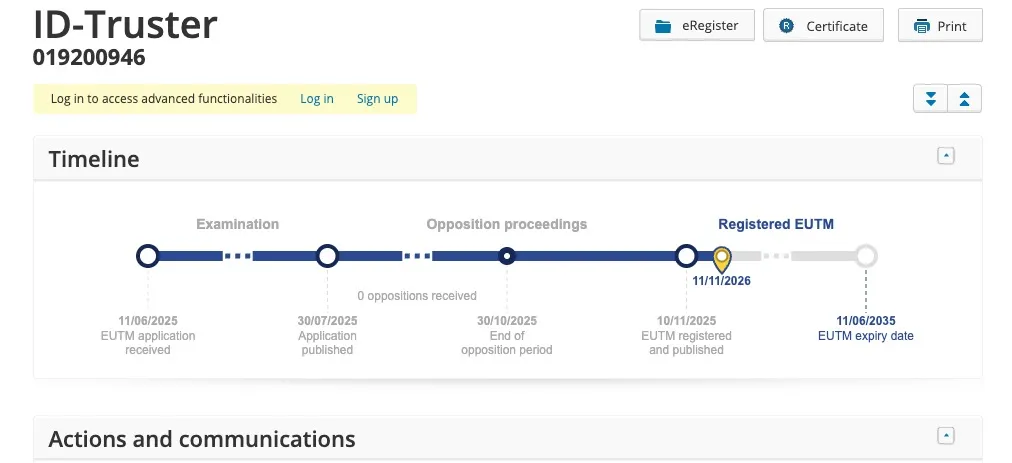
We filed the application with the EU Intellectual Property Office (EUIPO) on June 11, 2025, paid the fee, and waited. The application was published on July 30, 2025, which opened a three-month period where anyone could file an opposition. Nobody did.
On November 7, 2025, less than five months after we filed, ID-Truster became a registered EU trademark. It covers all EU member states and is valid until June 11, 2035. You can look up the registration in the EUIPO database under number 019200946.
Was it worth it?
Looking back, it was simple, painless, and relatively affordable. If you are a startup holding back on registering your name because it sounds complicated, our advice is to talk to a lawyer and just get started.