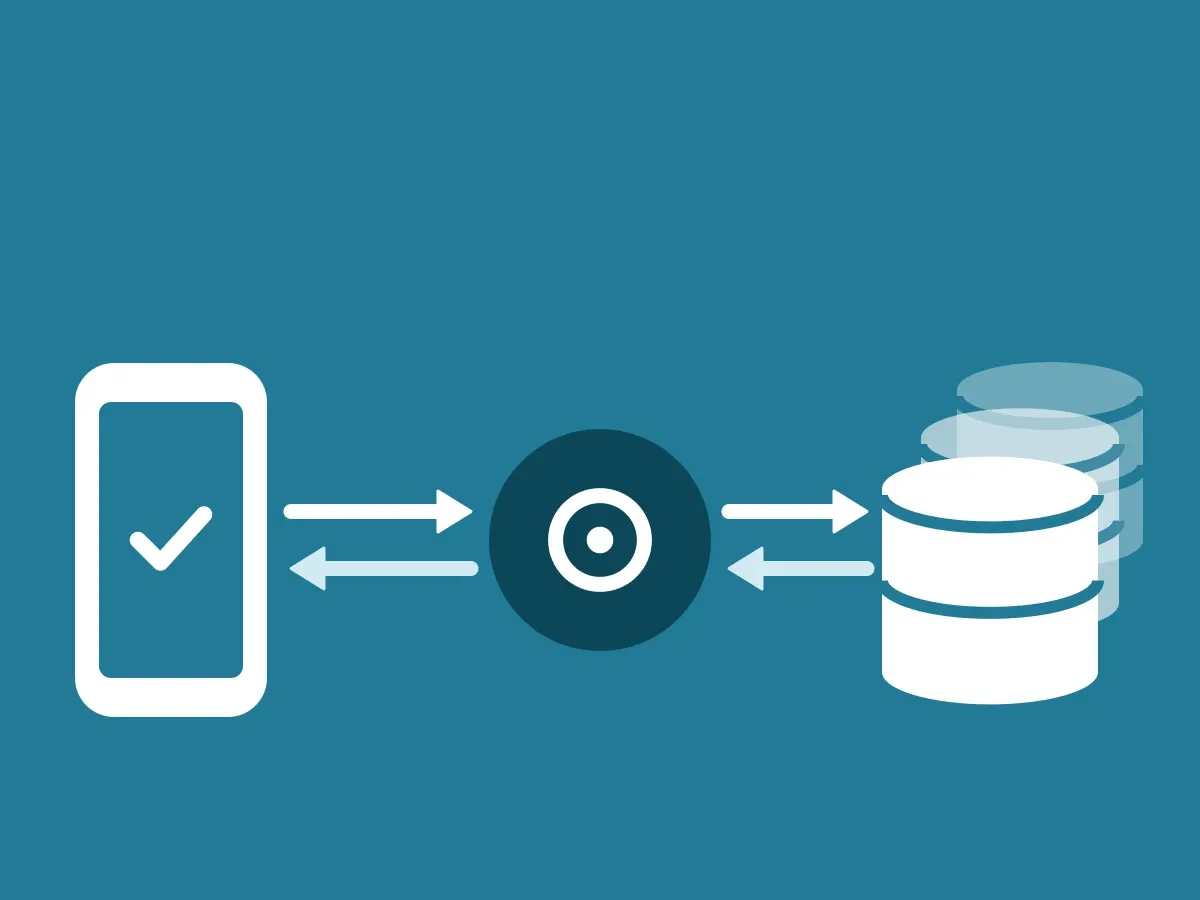
ID-Truster has three parts. The app, the ID-Truster Hub, and your ClientDB. How they connect is in How the ID-Truster ecosystem fits together. This page covers what each part is built on, where it runs, who operates it, and how we test it before release.
The stack at a glance
| Part | Built on | Runs at | Operated by | Tested before every release |
|---|---|---|---|---|
| App | Flutter and Dart | App Store and Google Play | ID-Truster | Unit tests and integration tests |
| ID-Truster Hub | Supabase | Supabase Cloud, EU (Frankfurt) | ID-Truster | Unit tests and penetration test |
| ClientDB | Supabase | Your own infrastructure or your own Supabase Cloud account | You | Unit tests and penetration test |
The app
The app is built in Flutter and Dart. iOS and Android share one codebase, so both versions behave the same. The app is available on the App Store and Google Play. A desktop version for Mac and Windows is in development.
Every release passes unit tests and integration tests of the whole app before it is sent to the stores.
The ID-Truster Hub
The Hub is ID-Truster’s central database. It is built on Supabase and hosted by Supabase Cloud in the EU, in Frankfurt. ID-Truster operates the Hub.
Every release of the Hub is unit tested and penetration tested before it goes live.
Your ClientDB
ClientDB is a Supabase instance that ID-Truster provides. You host it where you want, self-hosted on your own infrastructure or in your own Supabase Cloud account. You are responsible for running it, including hosting, operation, and access.
We release ClientDB as versioned updates. Every version is unit tested and penetration tested before we release it. You install each update on your ClientDB yourselves.
How we test and release
- GitHub and CI/CD. Our source code is kept on GitHub, and every change goes through an automated CI/CD pipeline. Tests run on every change. If a test fails, the release stops.
- Penetration tests. Our own team penetration tests the Hub and ClientDB before every release. We use Shannon, an AI pentester that reads the source code, finds weak points, and runs real exploits to prove them before a release goes live.
- Report on request. You can get the penetration test report under NDA. Contact us.