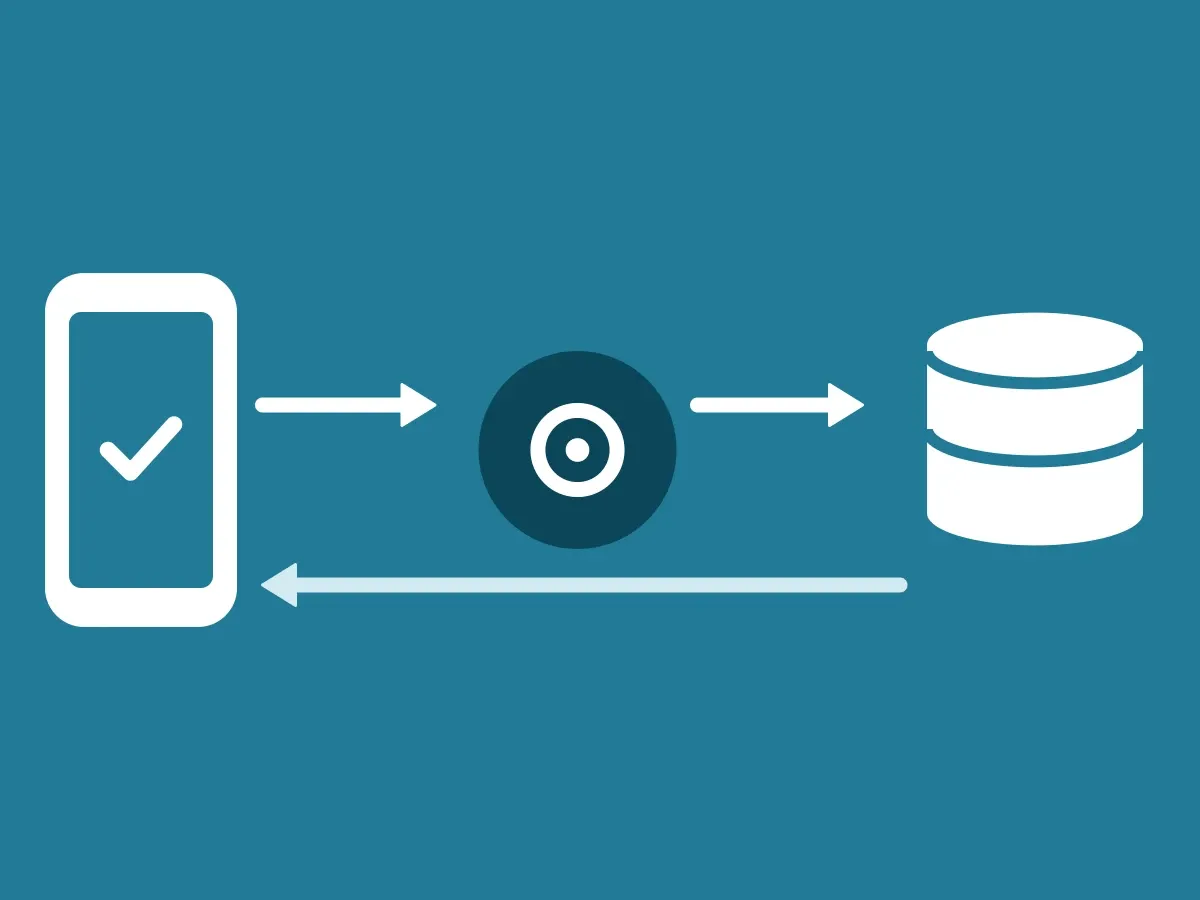
ID-Truster does not sit between you and your customers. It runs in parallel with the channels you already use, such as phone, email and SMS. It is an ecosystem of three parts that run in different places. This article is the map. It shows the three parts, where each one runs, and how they connect.
The three parts
- The ID-Truster app is free and runs on your customers’ phones and desktops. It is the same app for every company in the ecosystem, across all industries.
- The ID-Truster Hub is ID-Truster’s central system. It sits in the middle and passes messages between the app and each company’s ClientDB.
- ClientDB runs at each company. It creates, stores, and checks that company’s data, and signs everything it sends with the company’s own key.
Each company connects its CRM and newsletter system to its own ClientDB, and each company’s public key is in its own DNS.
Many companies, one app
The diagram shows one company. In the ecosystem, many companies stand side by side, each with its own ClientDB, its own systems, and its own key. They all reach the same app through the Hub, and no company can see another company’s data.
How the parts connect
Your customer data stays with you. What moves through the Hub is a signed signal that tells the app which company is contacting the customer, and the customer’s answer back. The Hub never connects to your systems. Your ClientDB only makes outbound connections. It listens to the Hub for signals addressed to it and picks them up itself, so you do not open any inbound ports in your firewall.
The connection always starts from your ClientDB, never from the Hub. Your ClientDB signs in with an email, a password and a token. On top of that, you create your own Ed25519 connection key and give the Hub only the public part. Every call from your ClientDB is signed with your connection key, and the Hub checks the signature before it accepts the call. The private key never leaves your company. Answers to the app are signed with a second key, your answer key, which the app checks against your DNS.
The Hub works like a mailbox. It knows which app or which ClientDB a signal is for, passes it on, and then deletes it right away. ID-Truster knows nothing about your ClientDB and cannot contact it.
The details behind the map
Each part of the map has its own article.
- Where data is stored covers where data is created, where it is stored, and what ID-Truster can see.
- How data moves through the ecosystem covers what moves through the Hub and what the Hub can read.
- How your two signing keys work covers your connection key and answer key, and why ID-Truster cannot fake an answer from you.
- ID-Truster runs alongside your systems covers what stays the same and what happens if something is down.