This article follows the check in an online meeting, from the moment your meeting admin sends it until every participant’s PIN has been checked. It works like an inbound call, but for everyone in the meeting at once.
Why check who is in the meeting
A face and a voice on a screen no longer prove who you are talking to. In a campaign the FBI calls FaceStealer, fraudsters take over a real account and send a meeting invite from it. In the meeting, they play stolen webcam video or a deepfake of someone the victim knows, often with extra fake participants to add pressure.
The check asks each participant to prove, in the meeting itself, that they hold the phone with the ID-Truster account you know. A recorded video or a deepfake cannot do that.
How the check works
-
Your meeting admin sends the check
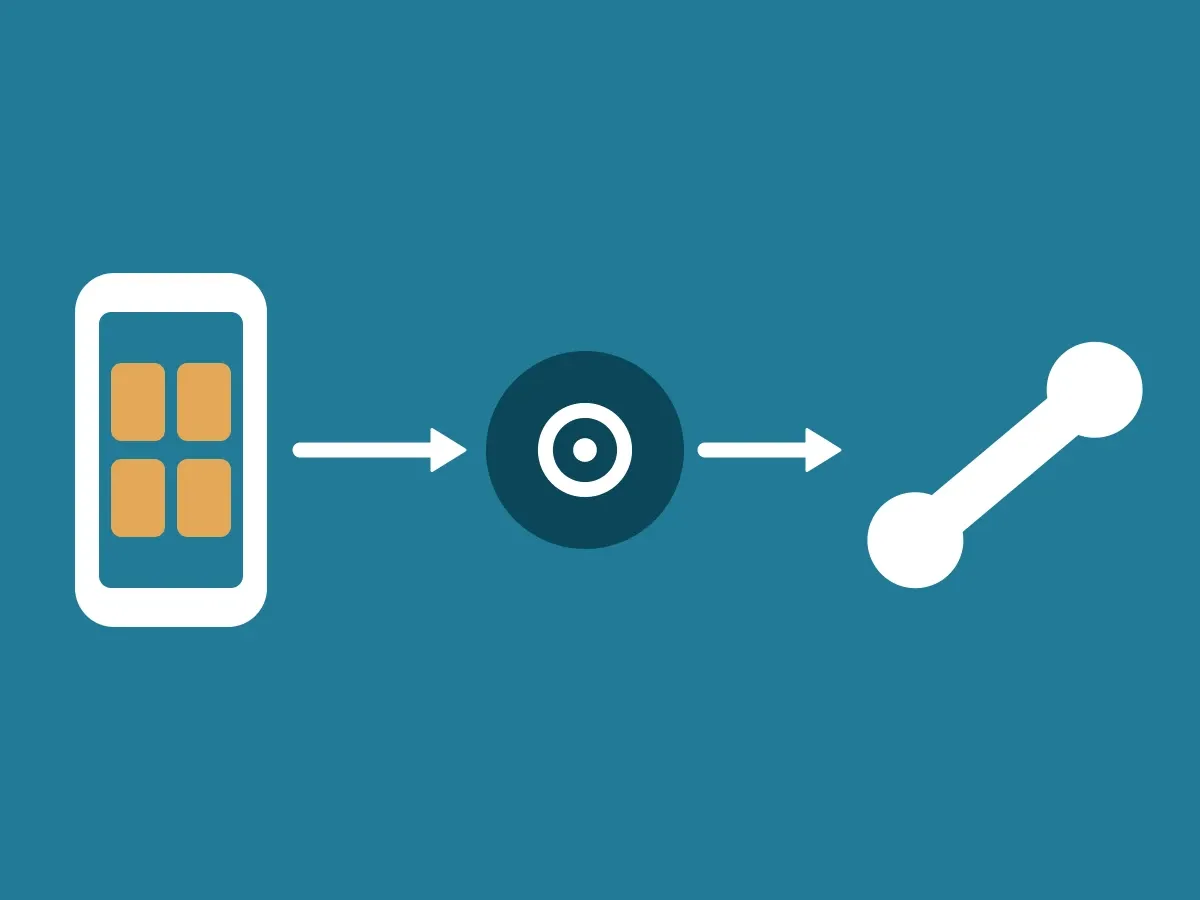
Your meeting admin opens the list of participants in your CRM, chooses whether the PIN is said aloud or written in the meeting chat, and clicks a button.
-
Each participant gets a unique PIN
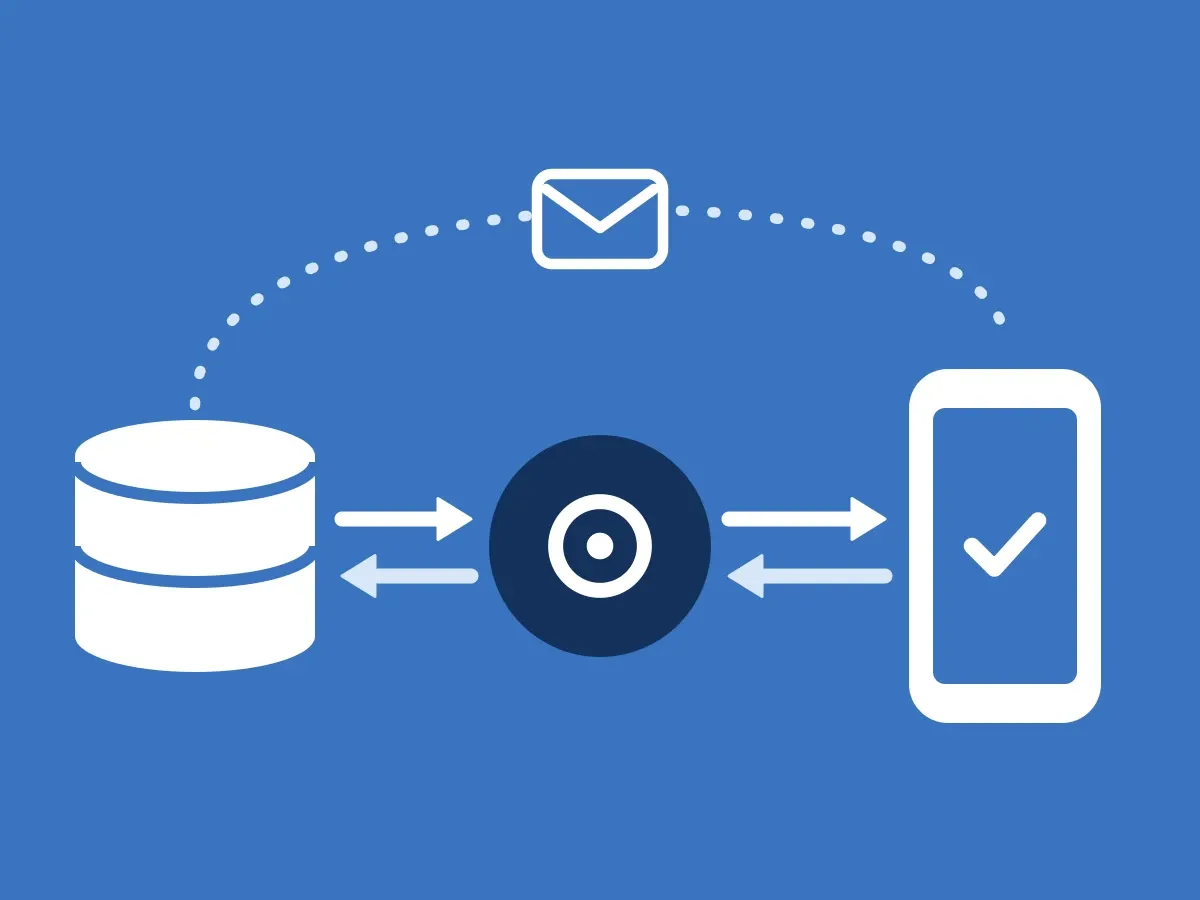
ClientDB creates a unique PIN for each participant, signs each push with your Ed25519 key, and sends it through the ID-Truster Hub to the ID-Truster user with the phone number or email address you have on file.
-
The participant confirms in the app
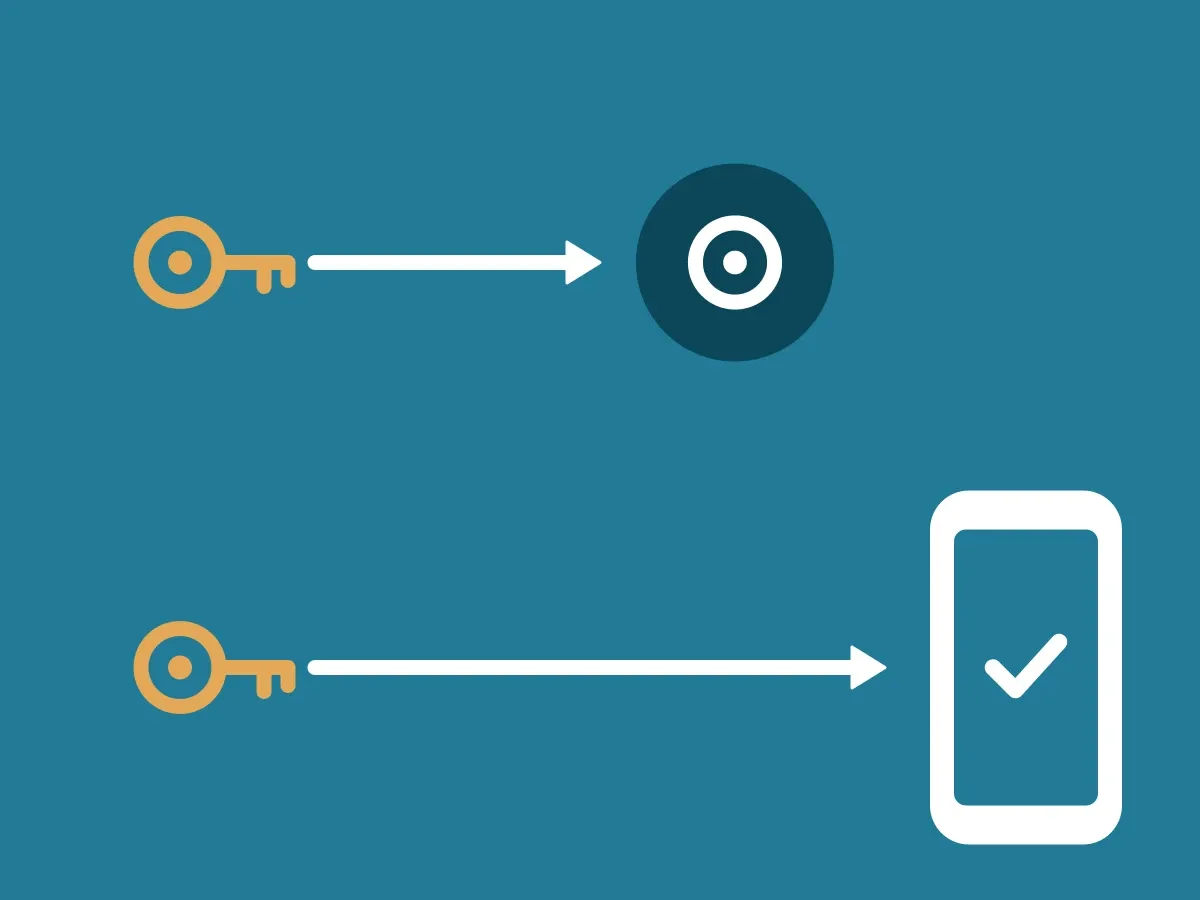
The app checks the signature against the public key in your DNS, shows your company name, and asks the participant to confirm. The participant must be signed in, and Face ID is required before the PIN is shown.
-
The participant gives the PIN in the meeting
Depending on what your admin chose, the participant says the PIN in the meeting or writes it in the meeting chat. Your admin checks it in the CRM, where the list shows who has confirmed, who has declined, and who is still pending.
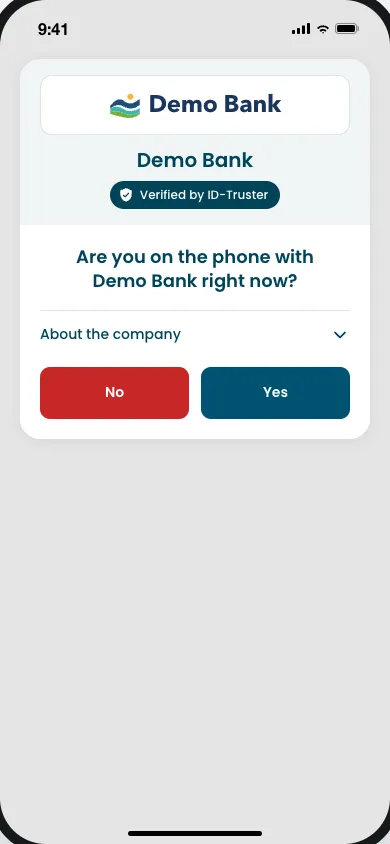
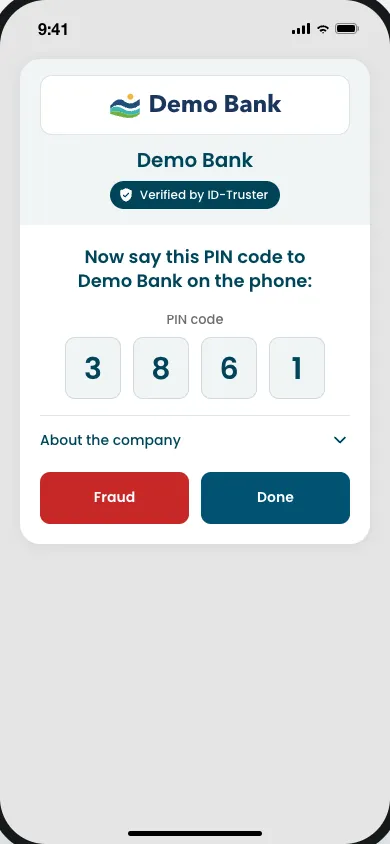
It takes one click from your admin, and all participants can answer within about 30 seconds, without leaving the meeting.
Why the PIN is given in the meeting
A yes in the app only shows that the account holder confirmed. If someone else has joined the meeting in their name, the real person may see the push and tap yes in good faith.
That is why the PIN has to be said or written in the meeting itself. Only the person in the meeting can give it there. Because each participant has their own PIN, you also know who gave it.
When a participant says no
If a participant says no, or taps Fraud after seeing the PIN, the app reports a possible fraud attempt. Your company is warned that someone may be pretending to be that participant. The app tells the participant to leave the meeting and not share codes or information.
If Face ID is declined, the PIN stays hidden.
Internal and external meetings
Who you can check depends on your license.
- Internal covers your own employees. Their phones also hold a key shared within your company, and the app uses it in the check. That shows the phone belongs to one of your employees, not just to someone with the right phone number or email address.
- External also covers customers, partners, and other people outside your company.
What the check proves
The check proves that the person in the meeting has access to the participant’s ID-Truster account. That means they are signed in with the email address you know, or they have added the phone number you have on file. A phone number can only be added after ID-Truster has sent a PIN code to it, so only someone with that number can add it.
The check cannot tell you how the person got that access. If someone has taken over the participant’s phone or account, or is forcing them to confirm, the check will still pass. Use it as a strong signal, alongside the checks you already make, and not as the only one.
Who sees what
- The ID-Truster Hub passes each push on and deletes it right away. It sees phone numbers only as a hash, and it never connects to your ClientDB.
- Your ClientDB sees who was checked, by which admin, and what each participant answered.
- The app gets the signed push, asks the participant to confirm, and shows the PIN after Face ID.
What the signal looks like is in How data moves through the ecosystem. How your keys work is in How your two signing keys work.